
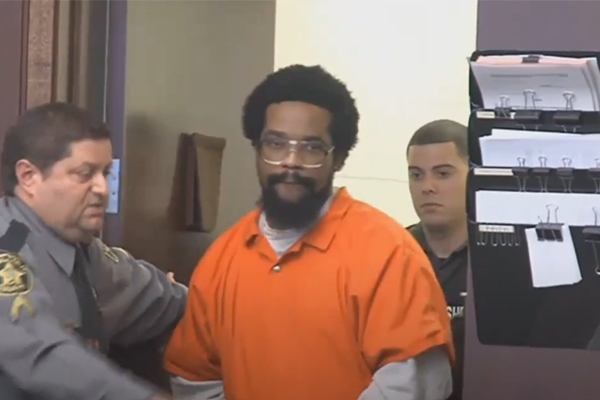
RAIFORD, FL — In a decisive and unanimous ruling, the Florida Supreme Court has denied a final appeal for Mesac Damas, the Haitian American man convicted of one of the most harrowing family murders in the state’s recent history. The decision, handed down on October 1, effectively ends a years-long legal saga that began with the brutal slaying of Damas’s wife and five children inside their North Naples home in 2009.
The court’s ruling affirms that Damas, now 49, was mentally competent and received adequate legal representation throughout his trial and sentencing. With this decision, the justices closed the door on any further attempts to secure a new trial, cementing the outcome of a case that has haunted both Florida and the Haitian diaspora for over a decade.
A Crime That Shook Two Nations
On a September day in 2009, authorities discovered a scene of unimaginable horror inside a townhouse in Collier County. Guerline Dieu Damas, 32, and her five children — Meshach, 9; Maven, 6; Marven, 5; Megan, 3; and Morgan, just 19 months old — were found dead, their throats slit and bodies bearing multiple stab wounds. The killings sent shockwaves through the community, not only for their brutality but for the profound loss of an entire family.
In the days following the murders, Damas fled to Haiti, sparking an international manhunt. He was apprehended by U.S. Marshals with assistance from Haitian authorities and extradited back to Florida. During his confession, Damas claimed he had been influenced by “bad spirits” and alleged Vodou spells — statements that added a layer of cultural complexity to an already devastating case.
In 2017, Damas pleaded guilty to six counts of first-degree murder and was sentenced to death. He has remained on death row at Union Correctional Institution in Raiford ever since.
Court Rejects Claims of Incompetence
Writing for the court, Justice John Couriel dismissed Damas’s assertions that he had been mentally unfit to stand trial. The ruling cited 12 separate mental health evaluations conducted by five experts between 2009 and 2017, all of which concluded that Damas was competent. Justice Jorge Labarga, in a concurring opinion, emphasized that the lower court had given the matter “the serious consideration required under Florida law.”
The Supreme Court’s decision brings a legal resolution to a case that has lingered in the public consciousness for years, but its emotional and cultural reverberations continue to be felt.
A Wake-Up Call for the Haitian American Community
The Damas case struck a particularly painful chord in Collier County, home to one of Florida’s largest Haitian American populations. The tragedy forced a reckoning within the community, prompting urgent conversations about domestic violence, mental health, and the pressures faced by immigrant families — topics that had long remained taboo.
Patrick Massillon, president of the International Haitian Corporation of Southwest Florida, recalled the immediate aftermath of the killings as a turning point. “Right after the murder — the Damas killings … We felt there was a need to educate the community about domestic violence,” he told WGCU PBS & NPR.
In response, Haitian churches, advocacy organizations, and nonprofits mobilized to provide support and education. Workshops in Haitian Creole, counseling services, and community outreach programs began to emerge, many of them rooted in faith-based institutions. Pastors were encouraged to address family conflict and violence from the pulpit — a rare and powerful shift in cultural norms.
A Legacy of Pain and Purpose
Though the legal chapter of the Damas case has now closed, its legacy endures. For many Haitian Americans, the tragedy remains a stark reminder of the intersection between migration stress, cultural expectations, and mental health. It has become a symbol of what can happen when domestic issues are left unspoken and unresolved.
Advocates across South Florida continue to push for culturally competent counseling and stronger support systems for immigrant families. The case is frequently cited in efforts to expand access to legal and social resources, especially for newcomers navigating unfamiliar systems.
As Damas remains on death row, the families of the victims — and the broader Haitian diaspora — view the Supreme Court’s ruling not just as a legal conclusion, but as a renewed call to action. The hope is that by confronting domestic violence and family trauma head-on, communities can prevent future tragedies and foster healing where silence once prevailed.